
Dangote in Ethiopia: From Cement to Energy and the New East African Oil Corridor
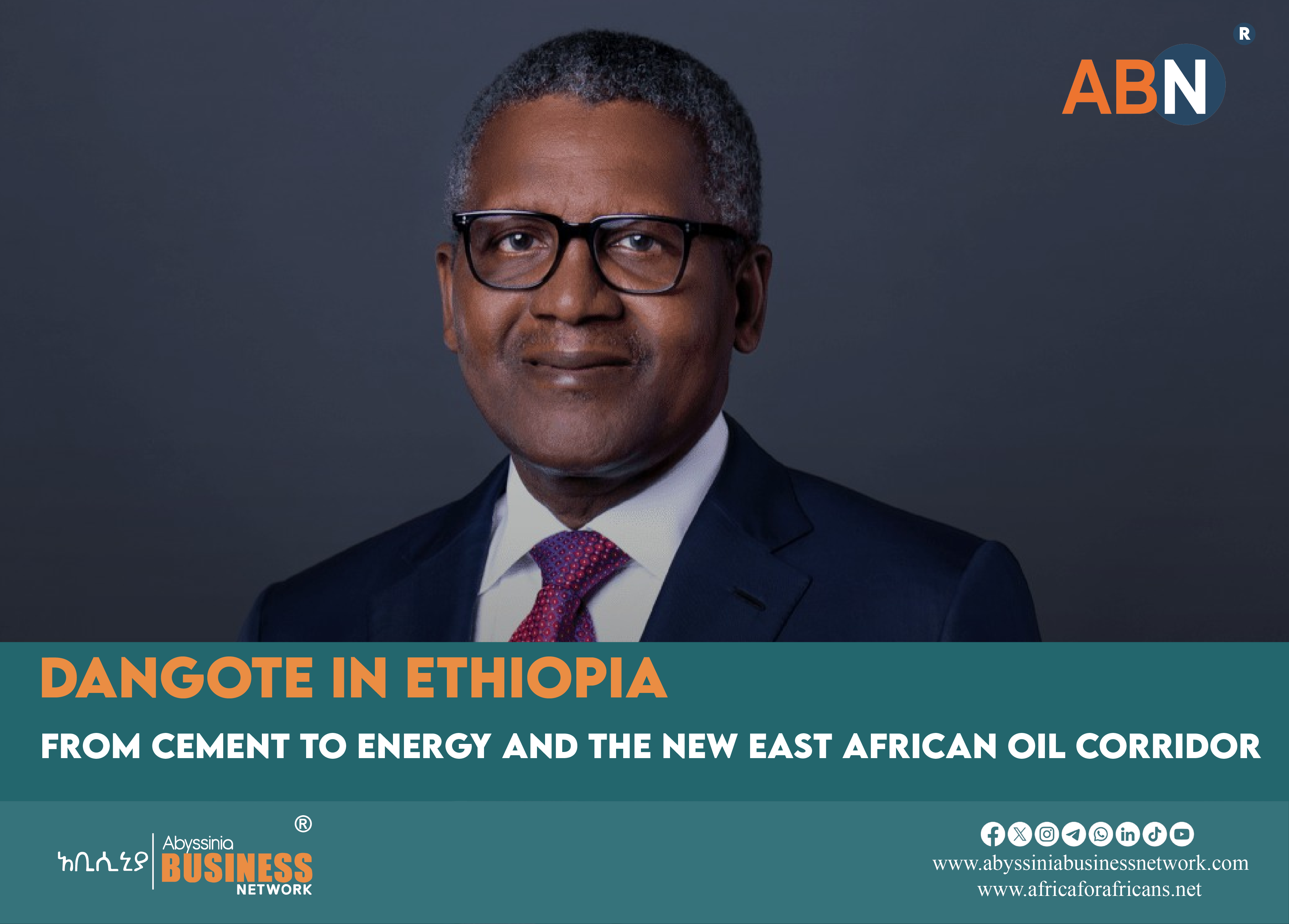
Addis Ababa,Sep 30/2026 (ABN)
Dangote’s presence in Ethiopia is entering a potentially broader phase, moving the story beyond cement and industrial manufacturing toward energy infrastructure and regional petroleum connectivity. Recent developments involving Dangote, Ethiopia and neighboring Djibouti, alongside the company’s planned refinery investment in Kenya, point to an emerging East African energy strategy with potential implications for trade, logistics and regional supply chains.
Dangote has already established a major industrial footprint in Ethiopia through its cement investment. Its 2.5-million-tonne-per-year cement plant at Mugher has positioned the Nigerian group as a significant participant in Ethiopia’s manufacturing sector. The company has now announced a broader investment ambition in Ethiopia, with its planned investment reportedly rising from $2.5 billion to more than $4 billion. The expanded plans include energy and industrial infrastructure such as a 110-kilometre pipeline, a 120MW power plant, a polypropylene packaging facility and a two-million-tonne NPK blending plant.
The most significant new development for the energy sector is the planned $660 million refined-petroleum pipeline connecting Ethiopia and Djibouti. The project, announced by Ethiopia, Djibouti and Dangote, is designed to strengthen the movement of refined petroleum products between the two countries and could become an important component of Ethiopia’s long-term fuel logistics infrastructure.
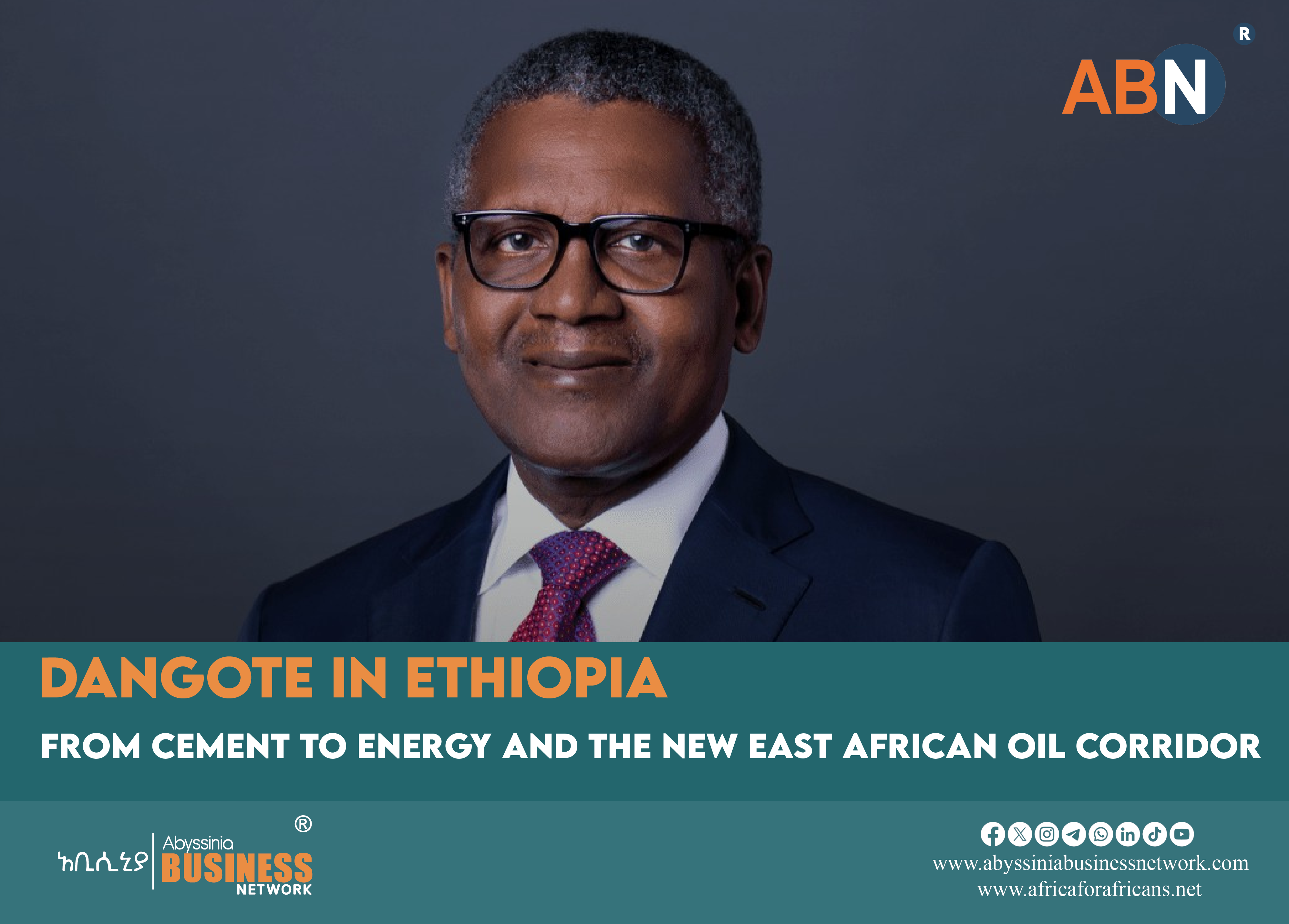
The proposed pipeline places Dangote’s Ethiopian ambitions within a wider regional context. Ethiopia is a large landlocked economy whose access to imported fuel depends heavily on regional transport corridors. Djibouti serves as Ethiopia’s principal maritime gateway, making energy infrastructure linking the two countries strategically important for the movement and distribution of petroleum products.
At the same time, Dangote is pursuing an ambitious oil-refining project in East Africa. The company is preparing to begin construction of a planned 700,000-barrel-per-day refinery in Lamu, Kenya, with completion targeted for 2030. The project is modeled on Dangote’s major refinery in Nigeria and is intended to address growing demand for refined petroleum products in East Africa.
The planned Kenyan refinery could fundamentally change the geography of petroleum supply in the region. East Africa currently depends heavily on imported refined fuel, making refining capacity, storage, ports and pipeline infrastructure important elements of energy security and economic planning. A large refinery connected to the coast could create a new regional supply platform for Kenya and neighboring markets.
Dangote’s Nigerian refinery provides the foundation for this strategy. The facility in Lagos has a current crude-distillation capacity of 700,000 barrels per day, with an expansion pathway to 1.4 million barrels per day. The integrated complex also includes petrochemical production, storage, marine infrastructure, pipelines and logistics facilities.
The company’s East African ambitions therefore extend beyond establishing individual factories. They point toward an integrated business model combining manufacturing, energy, logistics, infrastructure and regional trade.
For Ethiopia, this creates a different dimension to Dangote’s investment story. The country is already connected to the wider regional economy through the Djibouti corridor, while Addis Ababa remains one of Africa’s most important diplomatic and commercial centers. Investment in pipelines, power generation and industrial production could create opportunities to strengthen connections between Ethiopia’s domestic market and the wider East African economy.
The petroleum pipeline also raises the importance of regional infrastructure coordination. Fuel supply involves ports, storage facilities, pipelines, road and rail transport, financing, regulation and distribution networks. Connecting these systems efficiently can influence the cost and reliability of energy supplies for households, businesses, aviation, manufacturing and transportation.
The planned Lamu refinery adds another major element. Kenya’s coastal location gives the project direct access to maritime trade routes, while its proximity to other East African markets creates the possibility of regional distribution. Reuters reports that Dangote is offering regional governments the opportunity to take a 30% stake in the project, while the refinery is expected to support industrial development and create employment.

For Ethiopia, the significance lies in the potential interaction between these projects. A stronger regional petroleum network could connect production, importation, refining, transportation and distribution across several East African markets. Ethiopia’s connection to Djibouti, Kenya’s position on the Indian Ocean and Dangote’s existing industrial capacity could become parts of a larger regional economic network.
The development also reflects a broader shift in African business. Major African companies are increasingly moving beyond individual national markets and investing in infrastructure that connects multiple economies. Dangote’s expansion from cement into oil refining, petrochemicals, fertilizer, power and logistics illustrates this transformation.
The company’s strategy is particularly relevant at a time when African countries are seeking greater industrial capacity and stronger regional value chains. Rather than exporting raw materials and importing finished products, the development of refining, petrochemical, fertilizer and manufacturing industries can create additional stages of value creation within the continent.
For Ethiopia, the challenge and opportunity will be to ensure that major investments generate wider economic linkages through local suppliers, skills development, technology, infrastructure and regional trade. For East Africa, the emerging energy projects could contribute to a more interconnected petroleum market while creating new industrial and logistics opportunities.
Dangote’s story in Ethiopia is therefore evolving. What began with a major cement investment is increasingly connected to a broader vision involving energy, infrastructure and regional markets. With the proposed Ethiopia-Djibouti petroleum pipeline and the planned Lamu refinery in Kenya, Dangote is becoming part of a much larger conversation about how African capital can build the infrastructure required to connect African economies.